



University of Missouri School of Medicine MU Health School of Medicine
News Divider
Join us on Facebook!   Follow us on Twitter!   Subscribe to us!      


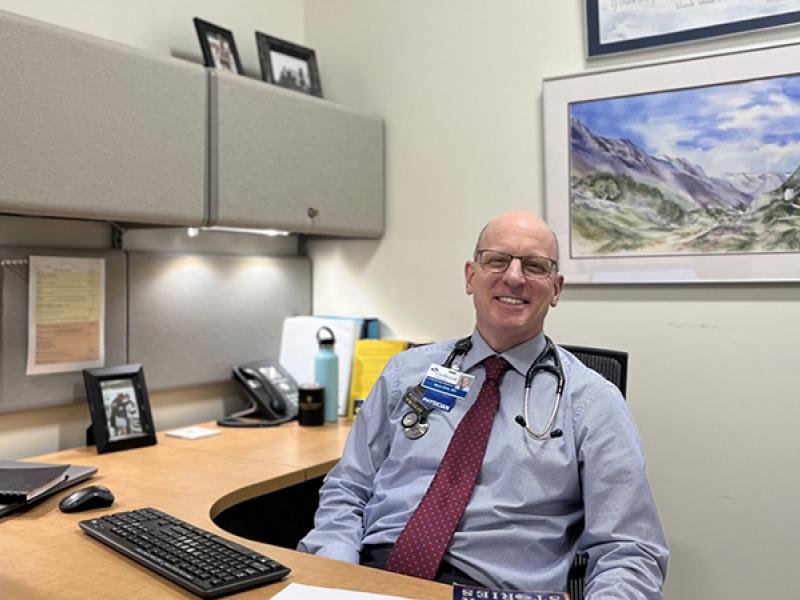
Dr. Koopman
An electronic health records tool created by the University of Missouri and Cerner Corporation saves time and money while reducing errors by decreasing the number of mouse clicks doctors use to search for patient data. Richelle Koopman, MD, and her colleagues described the tool, called a diabetes dashboard, in a study published in Annals of Family Medicine .


Health Records Innovation Saves Time and Money, Reduces Errors


Patient data found in just three mouse clicks, compared to 60 clicks with usual method

Physicians save significant time and make fewer errors when they use a new electronic health record tool created by the University of Missouri and Cerner. The corporation and MU teamed up to develop a single screen that gives physicians all the information needed to care for patients with diabetes.

Called a diabetes dashboard, the screen consolidates data about a patient's blood and urine tests, smoking status, foot and eye examinations, and other information into a single, easy-to-read display for primary care physicians. Conventional electronic health records require physicians to spend time searching through multiple screens for the same information, if they can find it at all.

"Primary care physicians see patients every 15 minutes. If we can use the dashboard to save physicians almost five minutes with each patient who has diabetes, that's a significant savings in time and costs," said Richelle Koopman, MD, an associate professor of family and community medicine at MU and a lead researcher of the dashboard. "Physicians can then use the time saved to do more important things, such as talk more with their patients about medications, diet and exercise."

Koopman and her colleagues at MU have published their dashboard research in the Annals of Family Medicine. Their study revealed that the dashboard saved physicians an average of 4.2 minutes per patient, and physicians only needed to use an average of three mouse clicks to find data. Physicians using conventional search methods used an average of 60 clicks trying to find the same information.

Physicians in the study who didn't use the dashboard couldn't always find the information they needed in the electronic health record. If physicians can't find information, they could ask patients to repeat costly tests and examinations.

Physicians who didn't use the dashboard also sometimes identified incorrect data from the electronic health record. In comparison, physicians using the dashboard always found and recorded the correct data.

The diabetes dashboard is currently used at MU clinics, and similar dashboards for such common health problems as high blood pressure, asthma and high cholesterol also are in use at the university.

MU and Cerner, the world's leading supplier of health information technology, have been developing the dashboard since 2007. In 2009, they formalized their partnership by creating the Tiger Institute for Health Innovation, which helps clinicians and technology experts discover ways to improve patient care.

"An important aspect of the dashboard is that it was developed with significant input from physicians, which makes it a really good example of user-centered design," Koopman said. "A lot of times when you implement new things in the electronic health record, there's a substantial amount of training and a big learning curve for physicians and other users. The dashboard is so user-friendly that no training is required.

"Physicians in our study enthusiastically and immediately embraced the new dashboard," Koopman said. "One of their best comments was 'this is exactly what we need.' "


Alumni Newsletter: Medicine@Mizzou

Medical School Update Clinical Research Center Opens
Comprehensive facility supports clinical
and translational scientists across MU in
developing new treatments and devices

Faculty and Staff Newsletter: Roar

ROAR Attacking HIV's Final Defenses
With a $3.4 million grant, MU is leading a
team of HIV researchers who are finding
new pathways for shutting down the virus

Magazine: Missouri Medical Review

Missouri Medical Review Better Combat Care
MU's surgery department is awarded a
$5.3 million grant to improve military medical training by using clinical simulation technology

Divider

News and Events

Retired Professor Professors Earn National Honors
For Improving Hospice Care

Contributions to end-of-life care recognized
by two national health care organizations

Graduation 2013 MU Ranked Among Top Schools
For Training in Family Medicine

Family medicine program among 12 tapped for special recognition by national academy

Graduation 2013 Ninety-Eight New Physicians Will
Graduate From MU Medical School

Many of the graduates will stay in state
for residency and train in primary care

Clarion Students Earn Fourth Win for MU in National Patient Safety Competition
MU wins CLARION case contest, which challenges teams to improve care outcomes

Binge Drinking Research Shows Binge Drinking Could Leave Lasting Damage
Overconsumption creates a different kind of liver damage that affects key organ functions

Destroyed by Tornado, Training Site Now Reopening in Joplin, Missouri
Mercy Hospital and MU celebrate new opportunities for future physicians

St. Baldricks MU Medical Students to Shave Their Heads for Pediatric Cancer Research
Supporters to gather April 13 at Mojo's to raise funds for St. Baldrick's Foundation
MU Internal Medicine Chair to Lead Largest Medical Specialty Group
David Fleming, MD, named president-elect of American College of Physicians

Discovery Could Increase Efficacy of Promising Cystic Fibrosis Drug
Data about defective protein described in National Academy of Sciences journal

2013 Match Day Match Day Marks Beginning of New Chapter for Medical Students
MU continues trend of producing physicians for Missouri and primary care specialties

Dongsheng Duan, PhD Discovering 'Needle in a Haystack' For Muscular Dystrophy Patients
Research on genetic sequence could lead to treatments for deadly hereditary disease

HIV Researchers Attack HIV's Final Defenses Before Mutations Emerge
Team targets enzyme that eludes current treatments to create next generation of drugs

Matheny Dermatology Manager to Lead Medical Administrators Group
Pamela Matheny named chair-elect of medical research and education assembly

Calcium Calcium Research Could Lead to Better Treatments for Aging Hearts
Federal award will expand study of element's influence on individual heart muscle cells

Headrick and Student Interprofessional Training in Quality, Safety Could Transform Health Care
Study recommends new requirements to improve education for physicians


Office of Communications
University of Missouri School of Medicine
One Hospital Drive, MA204G, DC018.00
Columbia, MO 65212
(573) 884-0298

Laura Gerding, APR
gerdingla@health.missouri.edu
(573) 882-9193

Rich Gleba
glebar@health.missouri.edu
(573) 884-0298

Mike Muin
muinm@health.missouri.edu
(573) 884-7541


Printer Friendly
Follow us on Twitter! Facebook RSS Feed
Website created and maintained by the Office of Communications.
Contact the MU School of Medicine.
Revised: April 27, 2013 - Copyright © 2011 - The Curators of the University of Missouri.
All rights reserved. DMCA and other copyright information. An equal opportunity/affirmative action institution.