
|
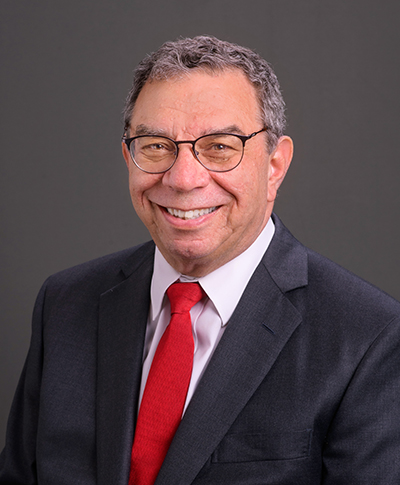
Hugh E. Stephenson Jr., MD – a pioneering heart surgeon, higher education supporter and organized medicine leader – died July 26, 2012, at his family's summer home in Delaware at the age of 90. Services for Dr. Stephenson, a 1943 graduate of the University of Missouri School of Medicine, were held Aug. 11, 2012, at the First Baptist Church in Columbia, Missouri. Survivors include Dr. Stephenson's wife, Sally, of Columbia; daughter Ann Stephenson Cameron, husband Alex Cameron, and grandchildren Sarah and Scott Cameron of Edmond, Oklahoma; son Hugh (Ted) Edward Stephenson III of Columbia; niece Sally Anglin of Brunswick, Missouri; and nephew Rick Greenblatt of Boston. Memorials are suggested to the MU Medical School Foundation and the Zeta Phi chapter of Beta Theta Pi fraternity. Click here for the family's official obituary.
Hugh E. Stephenson Jr., MD, BS Med '43, was the most passionate advocate for building at the University of Missouri in Columbia. MU already had a distinguished medical school, but in those days the school only offered a two-year bachelor's degree program. Missouri needed a full, four-year medical degree program to restock its physicians after World War II. While powerful opponents lobbied for building in a bigger city, Dr. Stephenson promoted the academic credentials of rural Columbia. It didn't matter that he was training at New York City's Bellevue Hospital at the time. The chief surgery resident still wrote dozens of letters to supporters, constantly called Missouri lawmakers from a Bellevue hospital payphone and traveled back to his home state to address lawmakers. "I, myself, would travel three times as far as New York if I thought I might be able to contribute even the slightest bit to a solution," Dr. Stephenson testified at Missouri's capitol in 1952. MU was ideal for collaborative training, patient care and research, he said. "They must be carried on simultaneously, for they are wholly dependent on each other, not only for inspiration but for their very means of success." Missouri was convinced. With more than $13 million in state money, MU launched its new medical degree program in 1955. The university's teaching hospital and medical school complex opened the following year. "My role in building the University of Missouri's medical school and hospital in Columbia is what I am most proud of," Dr. Stephenson said. "Patients and students throughout Missouri, especially in rural areas, have benefited greatly by locating these programs at MU." MU's medical school and hospital have evolved into a far-reaching health system that serves every county in Missouri. University of Missouri Health System has also trained tens of thousands of physicians, scientists, nurses, allied health professionals and other alumni. Many alumni who learned from Dr. Stephenson are now retired. Until just a few months before his death at the age of 90, when they returned to MU they could find Dr. Stephenson in his office at the medical school. The longtime Republican kept a collection of elephants on his office bookshelves, and awards for his many achievements as a pioneering heart surgeon and organized medicine leader lined the walls. He was a member and advocate at the national, state and local levels for such organizations as the American Medical Association, American Association of Surgery of Trauma, American College of Chest Physicians, American College of Cardiology, American College of Surgeons, American Heart Association, James IV Association of Surgeons, International Society of Heart Transplantations, Pan Pacific Surgical Association, Society for Neurovascular Surgery, Society for Surgery of the Alimentary Tract, Society for Vascular Surgery, American Trauma Society, and Cancer and Leukemia Group B (CALGB). He was also a founding member of the University of Missouri Medical School Foundation and Medical Alumni Organization, which awarded Dr. Stephenson its highest honor, the Citation of Merit. Below the Citation of Merit on Dr. Stephenson's office wall, piles of other plaques and certificates were displayed on the floor to make room for photos of children, grandchildren, colleagues and former students. "You should see the number of students who remembered him and loved him," said Dr. Stephenson's wife of 48 years, Sally. "Hugh always cared about his students personally, and I think they could tell that." Adoring alumni are Dr. Stephenson's true legacy. Long after MU replaces all of the hospital and medical school facilities that he lobbied for decades ago, generations of physicians will still remember Dr. Stephenson as one of their most cherished mentors and friends. "I do not believe there is any alumnus who could match Dr. Stephenson in the respect, admiration and affection that we, who graduated from this school, have for him," said Ted Groshong, MD '67, the medical school's senior associate dean for alumni affairs. "When meeting with alumni, the most common question I would always get is: 'How is Dr. Stephenson?'" Dr. Stephenson remained busy helping MU's medical school until shortly before his death. He and his wife helped co-chair MU medical school's capital campaign committee, which raised more than $112 million for medical education and research. The Stephensons showed their confidence in the campaign and the school's success by giving $2 million to create an endowed deanship previously held by Robert Churchill, MD. He and Dr. Stephenson knew each other for more than 23 years. "Hugh set the standard for the highest personal and professional integrity, and he will always be a model for our medical students and faculty," Dr. Churchill said. "I deeply miss being able to stop by his office to draw on his wisdom as a giant in medicine and as a leader of higher education in Missouri." Few others have served Missouri's flagship university in so many capacities. Dr. Stephenson became the first full-time surgery faculty member to join the medical degree program in 1953. He performed the university's first open-heart surgery five years later, and he was one of the first to implant an automatic defibrillator developed by MU's John Schuder, PhD. Dr. Stephenson also served as the John Growdon Distinguished Professor of Surgery, chair of surgery, interim dean and University Hospital's first elected chief of staff. He "retired" in 1992, but in 1996 he joined MU's Board of Curators and served as its president. "Curator Stephenson always reminded us that people are our most important asset," said Stephen Lehmkuhle, PhD, who became chancellor at the University of Minnesota in Rochester after serving as a vice president and interim chancellor with the University of Missouri System. "It's easy for administrators to become focused on such things as fiscal matters and capital improvements, but Curator Stephenson never let us forget that the faculty, staff and most importantly the students are the life of Missouri's university system." The University of Missouri family showed its appreciation to Dr. Stephenson in many ways. The most significant display came in 2003, when MU named its surgery department after him. Decades didn't diminish Dr. Stephenson's interest in the department or other areas of medicine at MU. "Over the years there honestly has not been a single day that I have not looked forward to coming to work," Dr. Stephenson said. "Through some unusual circumstance, you never know when you might discover the cure for cancer or something else extraordinary." Discoveries distinguished Dr. Stephenson early in his career. As a resident in New York, he developed one of the first mobile cardiac resuscitation units as well as the first organized course on cardiac arrest and resuscitation. "Hugh and I practiced open cardiac resuscitation at Bellevue Hospital, so we had our hands on hundreds of hearts before we came to MU," said Raymond Frederick, MD, Res '58. He followed Dr. Stephenson to MU and became the university's first residency graduate. "Hugh always reminded me of Sir William Osler. They are probably the most compassionate physicians whoever lived." One of Dr. Stephenson's first students was Thomas Fischer, MD '57, who became a surgeon in Hannibal, Mo. Dr. Fischer and his classmates spent much of their junior and senior years training in Dr. Stephenson's dog laboratory. "This exposure really wetted our appetite for becoming surgeons," Dr. Fischer said. "The more we helped, the more we learned, the more we got to do." Dr. Stephenson coaxed Dr. Fischer and his classmate Jeff Davis, MD, of Neosho, Mo., to continue their training at Bellevue. "Neither of us had been east of Indiana much less New York, but we would have gone to Antarctica if Dr. Stephenson suggested it," Dr. Fischer said. "When we got to Bellevue, we spent much of our time pushing around the crash cart that Dr. Stephenson invented. It was as big as a Volkswagen and 100 percent intern-powered." Like Dr. Fischer, many MU medical students in the '50s and '60s played football and other sports with Dr. Stephenson on Saturdays. "He was often the winner, and he was always a good sport about it," Dr. Fischer said. "Dr. Stephenson is a quiet and composed person, but he is an aggressive athlete and unrelenting in competition." A leg injury kept Dr. Stephenson from playing football at MU, but the doctor found other ways to stay in the game. As a student, he impressed MU coach Don Faurot by inventing a drop-kicking technique that was incredibly difficult to block. Dr. Stephenson also developed a special shoe for kickers, and he built regulation-size goalposts in his yard where he and his son, Ted, practiced for years. When President Ronald Reagan read Dr. Stephenson's book on punting pigskins, The Kicks That Count, the Gipper and doctor met to share their love of football. President Reagan later wrote to Dr. Stephenson: "I would agree that when all is said and done, it is the Kicker who usually spells the difference." Dr. Stephenson has saved and collected thousands of letters, and many of them appear in his Aesculapius Was a Mizzou Tiger. The mammoth book is a sort of Dr. Stephenson diary. It focuses on his MU experiences and the more than 170-year history of the university. MU has occupied Dr. Stephenson's life since he was a boy. Born June 1, 1922, at the county hospital in Columbia, Dr. Stephenson grew up two blocks from MU and attended kindergarten at the university. His father was a dentist in Columbia for 55 years. Whenever Dr. Stephenson walked by his father's downtown office and looked through the window, he saw the dentist standing over patients. "I thought some about becoming a dentist, but I decided it would involve too much standing on my feet," Dr. Stephenson said. "Of course, I probably stood on my feet at operating tables twice as long as my dad did. I had to stand more than 12 hours at a time for some operations." Dr. Stephenson graduated as valedictorian from Hickman High School in Columbia and received two bachelor's degrees from MU in 1943. When his nose wasn't in books, he was active building the Beta Theta Pi house on campus. He later served as the international fraternity's president. "Many business and political leaders are members of MU's Beta chapter, and Dr. Stephenson is widely considered to be the greatest among them," said MU Beta Robert Selsor, JD '85, an attorney in St. Louis. Dr. Stephenson completed medical school at St. Louis' Washington University, interned at the University of Chicago and spent two years in the Army Medical Corps. The military made him a certified radiologist and sent him to Italy for a year. Dr. Stephenson then returned to Washington University, which allowed him to complete some surgery training at Ellis Fischel Cancer Center in Columbia. As the first James IV Association Surgical Traveler from the United States, Dr. Stephenson visited more than 100 medical schools and hospitals before advising Missouri on where and how to train physicians. He promised that MU would provide the state with plenty of doctors, and today, more Missouri physicians received their medical degrees from MU than from any other university. He promised that MU would focus on serving the state's rural communities, and today, MU has one of the nation's most admired rural health programs. In many ways, Dr. Stephenson's approach to training students and residents has become a formal component of the MU School of Medicine's innovative curriculum, which emphasizes early exposure to clinical education and patient-centered care. "I've always prided myself on being a bedside teacher," Dr. Stephenson said. "I encouraged students to spend as much time as possible getting to know patients." Students would watch Dr. Stephenson spend an hour with each patient. Patients would come to MU days before their surgery to meet him and learn more about their treatment. Such learning opportunities are rare in an era of outpatient surgeries and managed care. What medical students are taught inevitably changes, Dr. Stephenson said, but how they are taught should remain the same. "I always thought that if you could make someone feel even greater than they are, they will rise to that occasion," he said. "You don't build great doctors by beating them down." As for research, Dr. Stephenson was proud that MU had recently become one of the nation's fastest-growing universities in terms of research funding. The university now has more than 1,000 scientists — all on one campus — who are improving health by studying humans, animals, plants and the environment. Collaboration among those scientists helped MU's medical school receive a record amount of external research funding in 2010 and 2011. "Only a handful of universities share MU's potential for collaboration among the allied sciences," Dr. Stephenson said. "It's very gratifying to see them continuing to come together as I envisioned more than 50 years ago." Leaders are now mourning the loss of Dr. Stephenson. "I speak for the entire MU family when I say how very saddened we are to learn of the passing of one of the true giants in the history of the University of Missouri Hospital and Clinics and the School of Medicine, Dr. Hugh E. Stephenson Jr.," said Brady Deaton, PhD, MU chancellor. "He faithfully and selflessly served the university as a faculty member, chair of the Department of Surgery, as interim dean and associate dean and as a member of the Board of Curators. His interests were varied, his skills were legendary and his legacy will live on in the hearts and minds of us all. Our sincere condolences to the Stephenson family as we share in this immense loss." "The entire health system is mourning a great leader," said Hal Williamson, MD, vice chancellor of MU Health System. "No account of our health system's history is complete without crediting Hugh E. Stephenson Jr., MD, a 1943 graduate of the University of Missouri School of Medicine. More than 60 years ago, the young surgeon guided the state through a heated debate over where to build its new medical school and teaching hospital. Dr. Stephenson often said he was most proud of his role building the university's medical school and teaching hospital, and his legacy will live on through our health system." Click here to download a portrait of Dr. Stephenson. Memorials are suggested to the MU Medical School Foundation. University of Missouri School of Medicine Office of the Dean One Hospital Drive, MA202, DC018.00 Columbia, MO 65212 (573) 882-6949 For more information please contact: Rich Glebaglebar@health.missouri.edu (573) 884-0298 Alex Hopkins hopkinsat@health.missouri.edu (573) 882-6949 |
![]() ![]() ![]() ![]() ![]() ![]() ![]() ![]() ![]() ![]() ![]() ![]() ![]() ![]() ![]() ![]() ![]() ![]() ![]() ![]() ![]() ![]() |

ealth care in Missouri might be far different had it not been for a young surgeon. Sixty years ago, he guided the state through a cantankerous debate over where to build its new medical school and teaching hospital.