
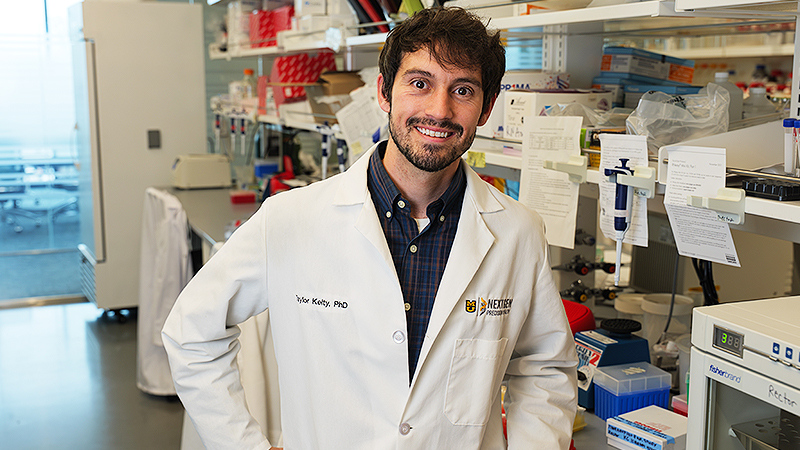
Since 2021, Taylor Kelty, PhD, a research assistant professor at NextGen Precision Health, has looked to advance translational approaches for neurodegenerative diseases, with a focus on targeting metabolic dysfunction in Alzheimer’s disease (AD). As the most common type of dementia, Alzheimer’s effects more than 6 million older adults in the United States, with that number expected to double by 2060.
Kelty’s current research project, “Bioenergetic Reprogramming through Ketogenic Enzymes: A Mitochondrial Strategy for Alzheimer's Disease,” will define how disruptions in ketone production in the liver and utilization in the brain affect brain energy balance and Alzheimer’s disease progression. His research team’s goal is to find new metabolic approaches to prevent or treat AD.
Ketone production is the process the liver uses to make ketones, which are small molecules the body can use for energy when sugar is limited or not being used well. In this study, Kelty’s research team are turning off a liver enzyme that helps make ketones so they can better understand how it affects the brain in AD.
“In this research, our metabolic approach is seeking to improve how the brain gets and uses energy,” said Kelty. “In Alzheimer’s disease, the brain may have trouble using sugar for fuel. Ketones may offer another source of energy for individuals and may also help calm inflammation or support health brain cells. Our work is trying to learn which of these effects matters most, so we can better understand what type of ketone treatment might be most helpful.”
In September 2026, Kelty was honored with a K99/R00 grant from the National Institutes of Health. The award will support his research over the next two years, totaling more than $276,000 in funding.
The K99 grant phase supports advanced training while researchers are still working with a mentor, while the R00 phase provides support as researchers move to an independent faculty position.
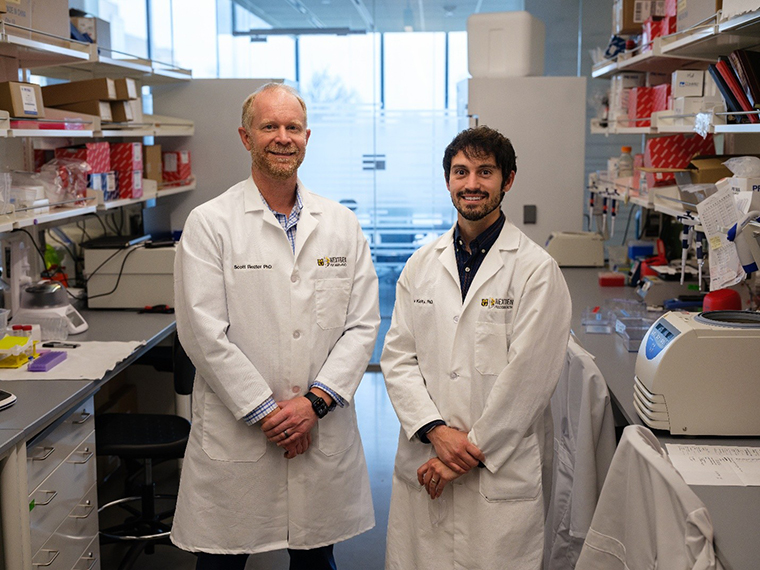
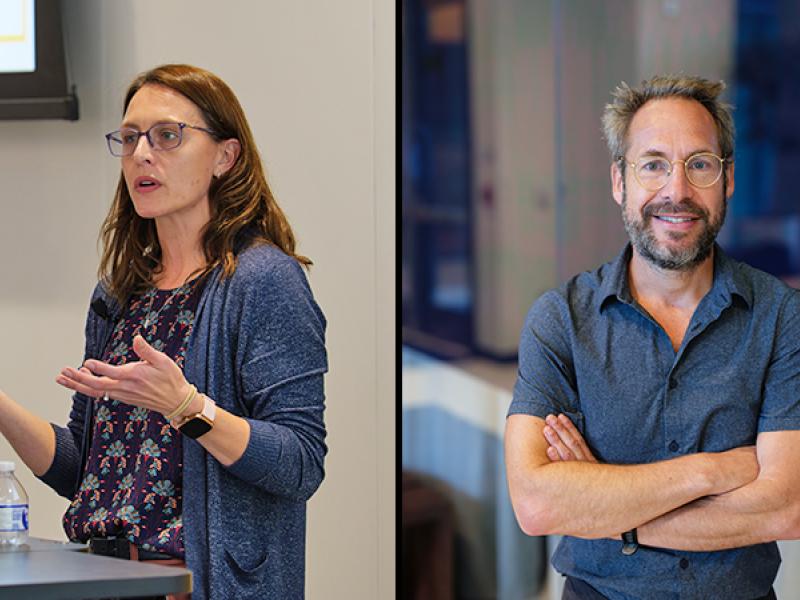
Kelty’s research involves collaboration with several University of Missouri School of Medicine faculty members, led by his primary mentor, R. Scott Rector, PhD, a Curators' Distinguished Professor of Medicine and of Nutrition and Exercise Physiology, associate dean for Basic Sciences and Research Infrastructure at the Mizzou School of Medicine, and Director of the NextGen Precision Health building.
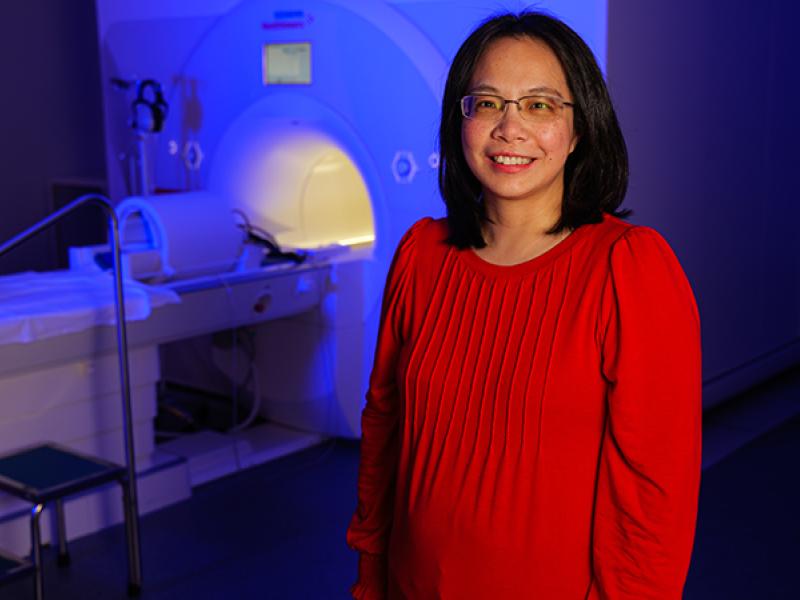
Rector will help guide work related to liver metabolism, mitochondrial function, and ways to change ketone production in the liver. Ai-Ling Lin, PhD, professor of Radiology, will provide expertise in Alzheimer’s disease and brain metabolism, including tools that help measure changes in brain chemicals. W. David Arnold, MD, executive director of NextGen Precision Health and a professor in the Mizzou School of Medicine, will provide expertise in aging biology and brain-focused therapies, helping understand how Alzheimer’s-related changes fit into the broader process of aging.
As Kelty submitted his proposal for the NIH Pathway to Independence Award (K99/R00 grant), widely considered one of the most prestigious and competitive early-career awards in biomedical and academic research, he knew Mizzou’s strong partnerships across campus would enhance his submission.
“This grant is not only judged on the research idea itself, but also on the strength of the mentoring and training team at-hand,” said Kelty. “Reviewers from the NIH want to see that the applicant has experienced mentors who are committed to helping them learn new skills, solve problems and become an independent scientist. I’m grateful for the support that Dr. Rector, Dr. Lin and Dr. Arnold have provided me, and the tremendous resources at my disposal inside the NextGen Precision Health building. This is a testament to the incredible opportunities that our university provides aspiring researchers.”
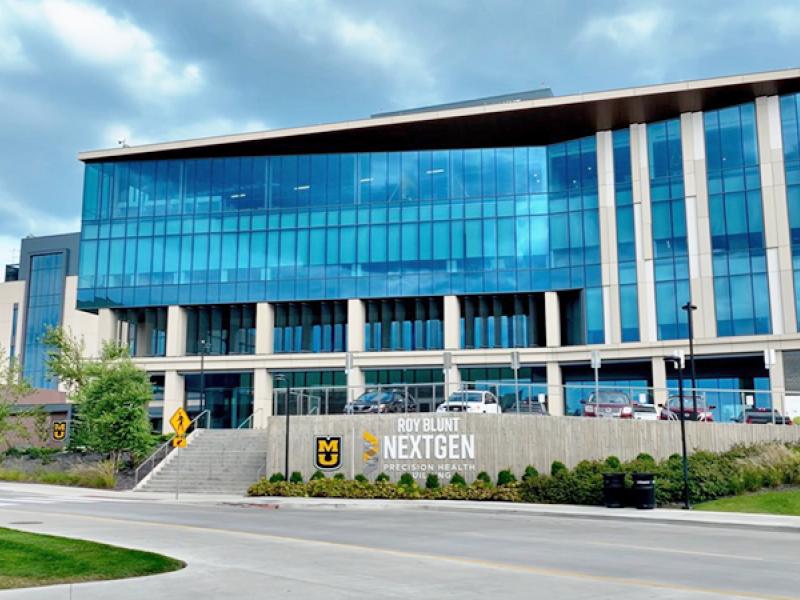
Highlighting the promise of personalized health care and the impact of large-scale interdisciplinary collaboration, the NextGen Precision Health initiative is bringing together innovators from across the University of Missouri and the UM System’s three other research universities in pursuit of life-changing precision health advancements. It’s a collaborative effort to leverage the research strengths of Mizzou toward a better future for the health of Missourians and beyond. The Roy Blunt NextGen Precision Health building at MU anchors the overall initiative and expands collaboration between researchers, clinicians and industry partners in the state-of-the-art research facility.