
Ever gone with your gut feeling? That phrase may be more literal than it sounds. Scientists are increasingly discovering that the health of your gut, also known as the gastrointestinal (GI) tract, may be closely connected with the health of your brain.
One researcher from the University of Missouri School of Medicine has received a $3.4 million grant from the National Institutes of Health (NIH) to continue her work studying how the gut may influence Alzheimer’s Disease (AD), the most common form of dementia. Recent studies suggest that the degeneration leading to AD may be related to imbalances in gut health.
“The gut microbiome is home to trillions of bacteria that help regulate many aspects of our health,” grant recipient Ai-Ling Lin said. “That variety of bacteria supports healthy gut function. When that balance is disrupted, it may send signals that affect the brain and potentially speed up processes linked to Alzheimer’s.”
There are still many important questions about the gut-brain relationship – like how changes in gut bacteria relate to specific changes in the brain, or if improving gut health means improving brain health.
“To tackle these questions, my team and I will take a ‘bench-to-bedside’ approach, where we’ll study both people and laboratory models,” Lin said. “We will track how gut health relates to brain changes and memory over time, and test whether gut bacteria that’s linked to Alzheimer’s may contribute to brain changes.”
Lin’s team will also explore potential ways to restore a healthier gut environment, like targeting inflammation and using dietary approaches like supplements to support beneficial bacteria. They also plan to test if certain treatments can reverse the harmful brain and cognitive changes associated with both gut imbalance and AD.
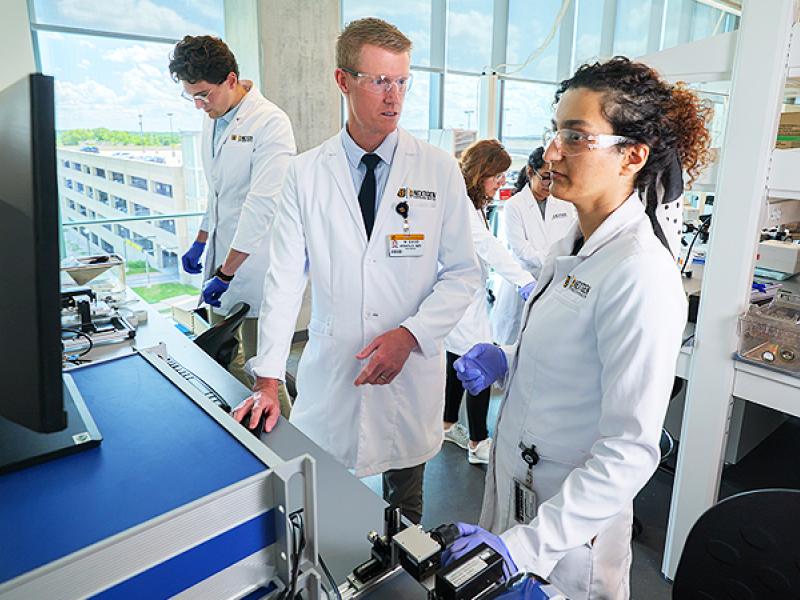
In her research, Lin has been using an advanced magnetic resonance imaging (MRI) machine, the 7 Tesla MRI, which is one of the most powerful MRIs available in Missouri. It provides higher quality and more detailed scans, which will be helpful when trying to capture images of brain structure and function. By combining these scans, gut microbiome analyses and cognitive testing, the research team hopes to better understand how the gut and brain interact as Alzheimer’s develops.
“There’s still so much we don’t understand about how Alzheimer’s begins,” Lin said. “Our goal is to uncover how the gut may be involved and, ultimately, how we can use that knowledge to develop new ways to protect brain health through treatments and lifestyle strategies.”
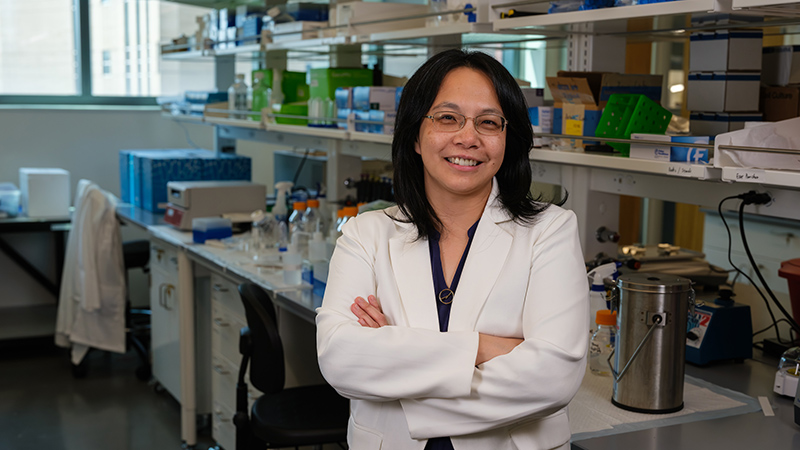
Ai-Ling Lin, PhD is the Vice Chair of Research and a professor in the Department of Radiology at the Mizzou School of Medicine. She is also a professor at the Institute for Data Science & Informatics and a NextGen Precision Health Investigator. The project is a collaboration with the Icahn School of Medicine at Mount Sinai, combining expertise in brain imaging and disease biology. The NIH grant will provide $3.38 million over four years, through 2030.