
Access to autism evaluations through specialty health care is notorious for long wait times across the United States. In Missouri, many families wait nearly a year for a diagnostic appointment. AI might be a solution to cutting the wait, according to researchers from the University of Missouri School of Medicine.
Lead author Kristin Sohl and her team partnered with Cognoa, Inc. to test their FDA-approved medical device, CanvasDx, for primary care clinicians in areas without autism care. It incorporates AI algorithms into patient data and makes a prediction of a positive or negative autism diagnosis, depending on the information provided. If it cannot make a definite prediction, it gives an ‘indeterminate’ result.
“Our mission is to increase access to the best practices for autism care across rural and underserved communities,” Sohl said. “To explore CanvasDx as a potential tool for best practices, we used the ECHO Autism community, which trains primary care clinicians across Missouri and beyond in autism care.”
Children in rural Missouri often wait longer to access autism evaluations, and this presents an opportunity for families to get the care they need. According to the study, traveling to specialty care centers meant traveling an average distance of 97 miles. Keeping care local helped families save gas and receive a diagnosis 5-7 months earlier than if they had waited.
“Devices like CanvasDx, especially when used by autism-experienced clinicians, can help accelerate diagnosis, so children have faster access to services that support them,” Sohl said. “It can also provide support for the clinician and streamline processes of the evaluation.”
In the study, using the data of 80 children, the device produced determinate results for 52% of patients, but did not provide any false positive or negative diagnoses and never contradicted a clinician’s diagnosis. Sohl says this highlights the need for clinicians to receive education on autism evaluation, diagnosis and care.
“Identifying autism and starting individualized support for a child with autism are critical for optimizing their outcomes,” Sohl said. “Autistic children and their families deserve high-quality and timely access to local care and expertise. Using AI-integrated devices like CanvasDx can expedite diagnostic processes and add additional, objective data to support primary care clinicians in making diagnoses.”
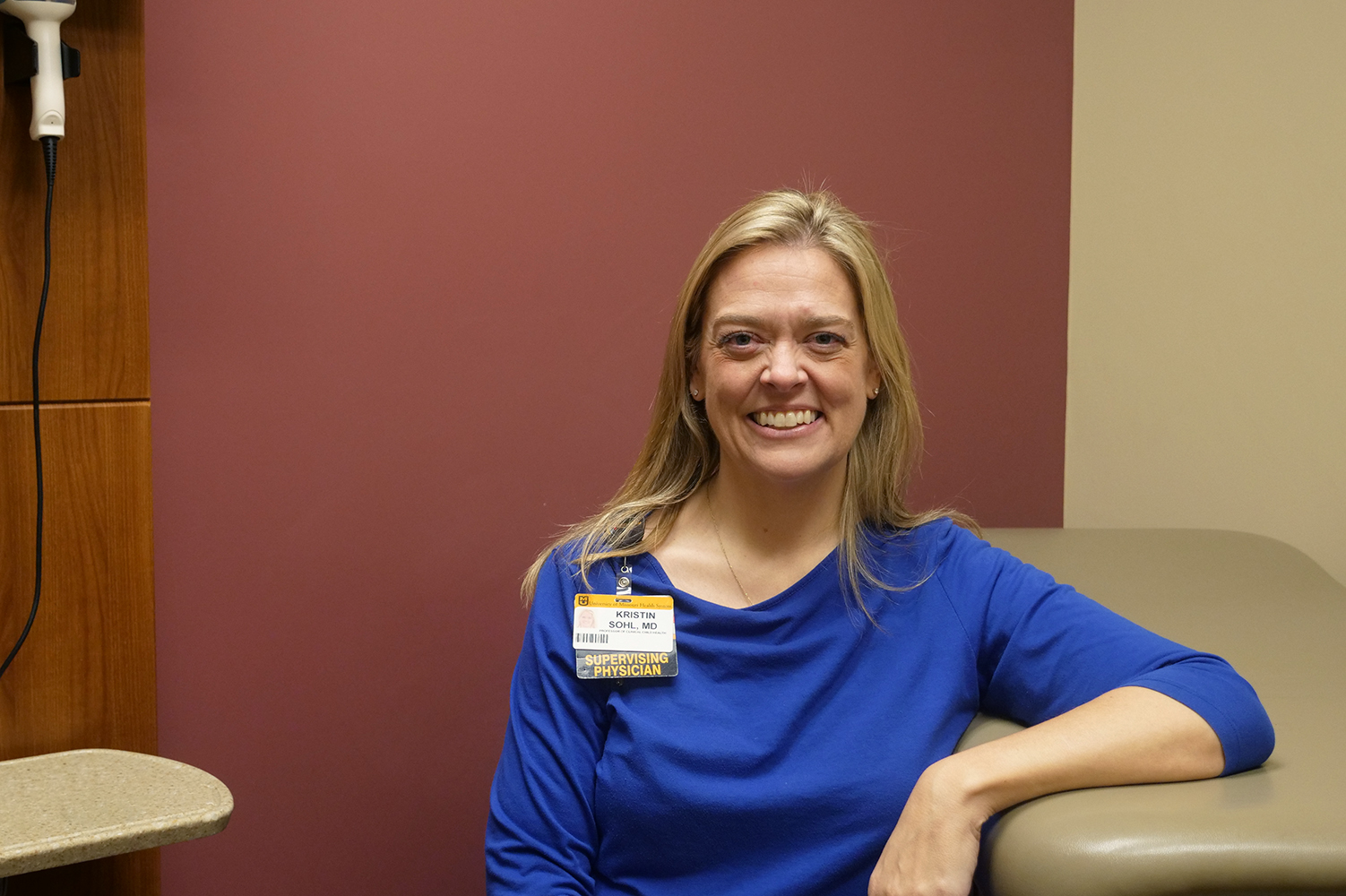
Kristin Sohl, MD is a pediatrician at MU Health Care and a professor of pediatrics at the Mizzou School of Medicine. She is the founder and executive director of the ECHO Autism program and the Medical Director of the Missouri Telehealth Network (MTN) and the Office of Continuing Education for Health Professionals.
“Integration of an Artificial Intelligence–Based Autism Diagnostic Device into the ECHO Autism Primary Care Workflow: Prospective Observational Study” was recently published in JMIR Formative Research. In addition to Sohl, Mizzou study authors include Alicia Brewer Curran, lived experience expert for ECHO Autism; Melissa Mahurin, associate director of Data and Evaluation for ECHO Autism Communities; and Valeria Nanclares, director of Global Programs and Expansion for ECHO Autism Communities. Erik Linstead, Kelianne Heinz, Elia Eiroa Lledo, Carmela Salomon, Minda Seal and Sharief Taraman contributed.