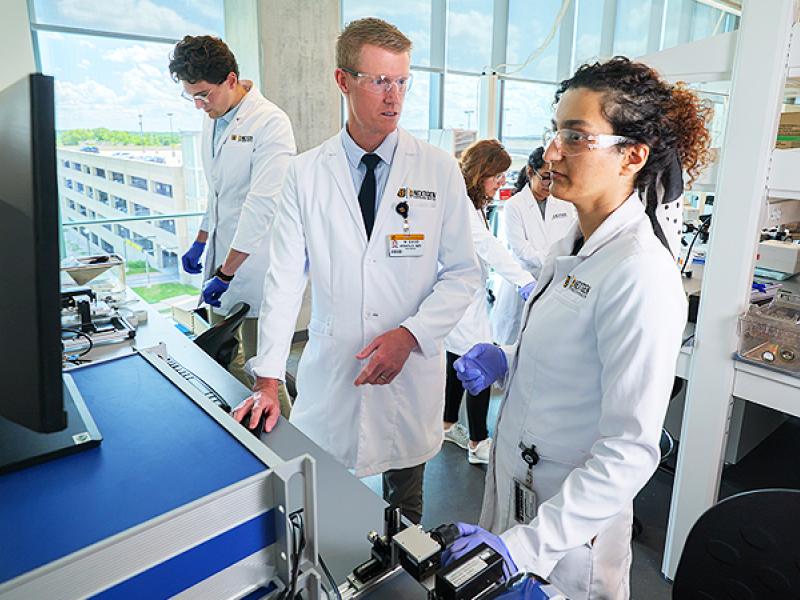


The human body is often described in parts — different limbs, systems, and organs — rather than something fully interconnected and whole. Yet many bodily processes interact in ways we may not always recognize. For example, researchers at the University of Missouri School of Medicine may have found a link between high blood pressure and an overactive nervous system.
High blood pressure, also called hypertension, is a common cardiovascular condition and a risk factor for multiple diseases and sudden health concerns like stroke or heart attack.
“Understanding how hypertension develops is key for helping us determine what the best treatment is,” study author De-Pei Li said. “In a primary hypertension rodent model, we found elevated activity in the sympathetic nervous system, which controls the ‘fight or flight’ response and many of our body’s automatic functions.”
Researchers also saw high activity in neuroendocrine cells, which enable communication between the nervous system and the network of hormones called the endocrine system.
Patients with hypertension tend to have more neurons activated from the hypothalamus, the brain region that controls neuroendocrine function and the sympathetic nervous system. It is unclear, however, why these cells affect blood pressure.
“The goal is to understand how these neurons interact to balance the hormone levels and influence blood pressure,” Li said.
Li’s team explored possible ways to control blood pressure by targeting neural activity. They suppressed the activity of neuroendocrine cells and successfully lowered blood pressure in hypertensive rats. In addition, researchers identified a receptor, which is a special type of protein that facilitates communication between neuroendocrine cells and neurons controlling the sympathetic nervous system.
“Our findings suggest that if we can develop a chemical agent that blocks this receptor, it could be a new treatment for primary hypertension,” Li said. “Future research will focus on finding this agent and testing if it works in other models of high blood pressure. If successful, this could help the millions of people living with hypertension.”
De-Pei Li, MD, MSc is a professor of medicine at the Mizzou School of Medicine and the associate director for the Center for Precision Medicine. His research focuses on neurobiology, cardiovascular science and neuroscience.
“Unrevealing the role of hypothalamic corticotropin-releasing hormone neurons in blood pressure regulation in hypertension” was recently published in Cardiovascular Research, a journal with the European Society of Cardiology. In addition to Li, Mizzou study authors include Hua Zhang, research scientist; Cody Carter, research specialist; Marc Augenreich, research assistant; Xunlei Kang, MD, PhD, associate professor of medicine; Daniel Davis, PhD, co-director of the Animal Modeling Core; Luis Martinez-Lemus, DVM, PhD, professor of Medical Pharmacology and Physiology and a NextGen Precision Health Investigator. Zhenguo Liu, Paul Carney, Sridhar Vasudevan and Ming Lei also contributed.