
Everyone has experienced some form of a respiratory virus, whether it be the common cold or something more severe like influenza. For young children, the stakes are higher as their bodies have an inexperienced immune system. Respiratory viruses are the most common reason young children are hospitalized.
Aiming to reduce hospitalizations and some sniffles, one researcher from the University of Missouri School of Medicine recently received a $2.8 million grant from the National Institutes of Health (NIH) to study why immune cells in the lungs don’t ‘remember’ respiratory illnesses for long.
“Memory T cells are part of the immune system that ‘remembers’ past infections. Resident memory T cells (TRM) are a subset that stay within tissues and organs,” grant recipient Emma Teixeiro said. “For whatever reason, lung TRMs disappear faster than other memory cells after infection.”
Teixeiro and her lab will start by studying NFkB, a molecular ‘switch’ linked to inflammation, to learn how it helps create and maintain TRMs in the lungs that stand guard against respiratory viruses. Their recent research shows that NFkB levels affect how and when TRM cells generate during an immune response, warranting a closer look at the unique role NFkB plays.
“We are exploring how specific inflammatory-associated molecules may influence the body during infection, especially when their levels are elevated, and if they may be feasible therapeutic targets,” Teixeiro said. “Overall, we hope that what we learn can be used to develop better vaccines and treatments for respiratory diseases.”
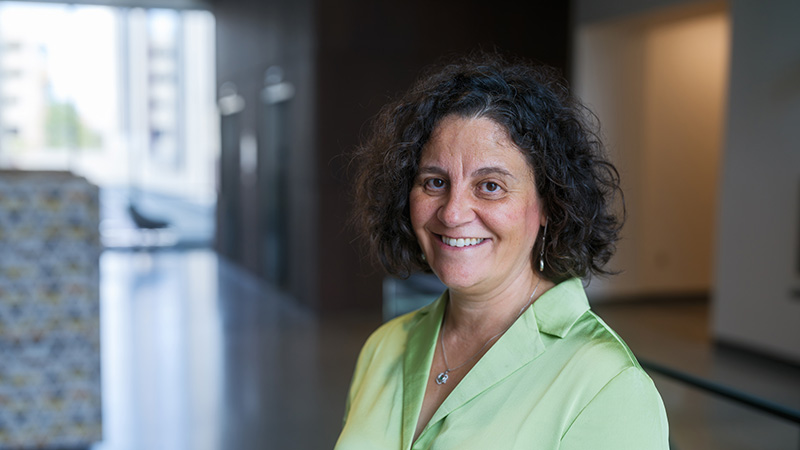
Emma Teixeiro-Pernas, PhD is a professor of Molecular Microbiology and Immunology and Surgery at the Mizzou School of Medicine. She is also a NextGen Precision Health Investigator. The NIH grant will provide $2.77 million over the next four years.