

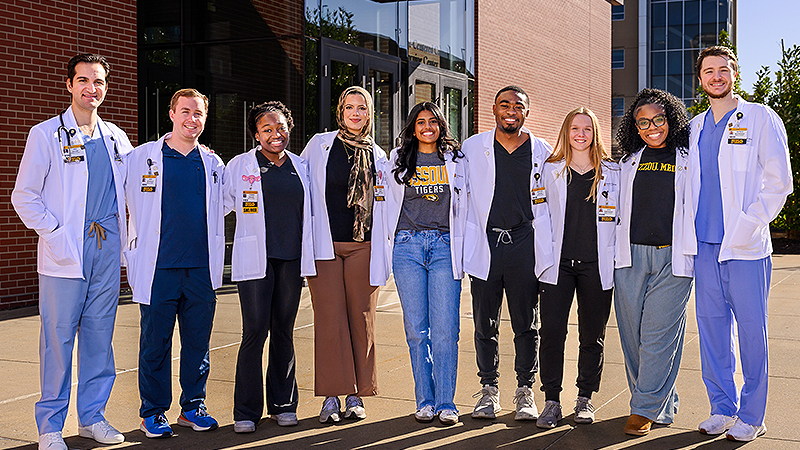
The University of Missouri School of Medicine was recently selected as one of 12 U.S. medical schools to receive grants to help enhance clinical reasoning education.
Funded by Sketchy as part of its clinical reasoning catalyst program, Mizzou is implementing DDx, Sketchy’s new virtual patient program, into its medical education curriculum. Through Sketchy’s AI-powered clinical readiness platform, medical students can engage with virtual patients and virtual attending physicians, make diagnostic decisions and receive real-time feedback on their performance.
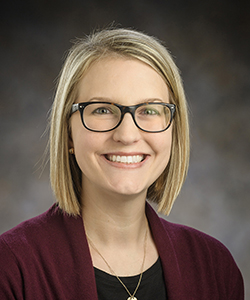
Colleen Hayden, EdD, associate dean for program evaluation & assessment and Joel Shenker, MD, PhD, associate dean for curriculum, are actively collaborating with Mizzou medical students to help improve the pilot program.
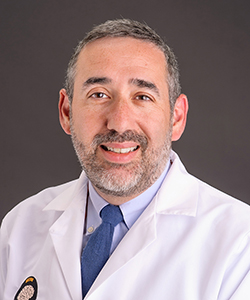
“This initiative meets the learner where they’re at,” said Shenker. “It starts with a student trying to figure out a simulated patient, using real-time interactions meant to feel like managing an actual patient. The technology forces the student to test out ideas by asking questions and getting feedback in real time. So, each learner grows the reasoning skills they most need to improve on.”
The grant will run throughout the 2026 calendar year, allowing more than 400 Mizzou medical students to use the Sketchy DDx platform and share feedback to support its future development of this tool.
“We’re very excited to be able to participate in this pilot program with Sketchy to not only support our students with developing their clinical reasoning skills, but also to collaborate with our colleagues across the country to help shape the future of this space where technology and clinical skills intersect,” said Hayden.
Related News
Dr. Ai-Ling Lin earns 2026 Distinguished Investigator Award
Dr. Young-Walker earns 2026 AAMC Presidential Award
Behrmann awarded NIH Predoctoral Fellowship Award