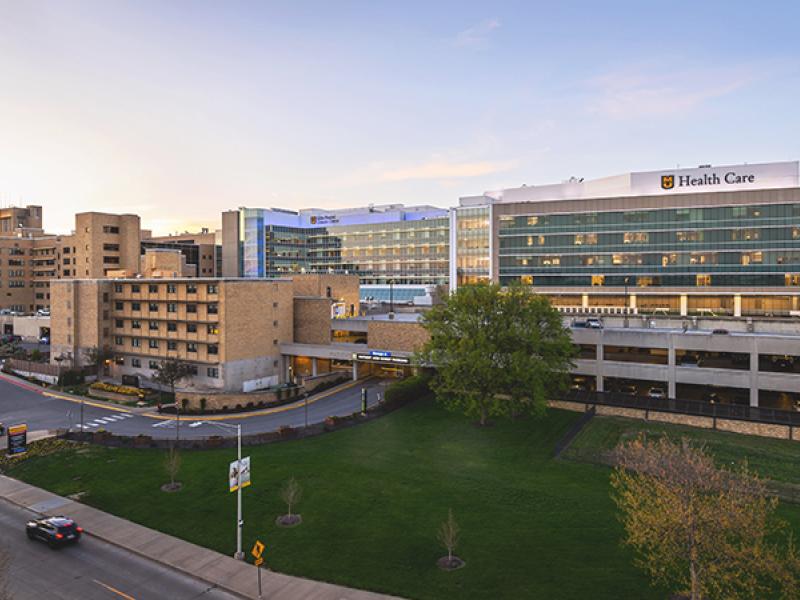

As the first publicly supported medical school west of the Mississippi River, the University of Missouri School of Medicine has improved health, education and research since 1872.
More Missouri physicians received their medical degree from MU than from any other university. The School of Medicine’s more than 720 faculty physicians and scientists educate more than 1,000 medical students, residents, fellows and graduate-level learners.
Our researchers focus on lifesaving discoveries that address the most prevalent health problems. The school is nationally ranked in such areas as family and community medicine, primary care, pharmacology and physiology, and health management and informatics.
MU School of Medicine graduates treat patients from every county in the state, and more Missouri physicians have received their medical degrees from MU than from any other university.
MU School of Medicine graduates are trained, evaluated and expected to be competent in their ability to deliver patient-centered care, including their capability to communicate with the patient, family members and colleagues working as part of an interdisciplinary team. The school uses a patient-based learning style, which emphasizes self-directed learning and early clinical experiences.
Graduates of MU School of Medicine consistently score higher than the national average on the United States Medical Licensing Examination (USMLE).
Our MISSION
To save and improve lives – through exemplary education, research and patient care.
Our VISION
We will be the premier and transformational academic health system for Missouri.
Our VALUES
- Respect
- Responsibility
- Discovery
- Excellence
- Service
Strategic plan
Leaders from the School of Medicine and MU Health Care ensure success and sustainability through a well-defined and strong strategic plan. The strategic plan maintains focus on achieving our mission and vision and serving the needs of our primary stakeholders to include patients and their families, employees and learners.
One School, Two Campuses
As the demand for physicians continues to outpace supply nationwide, the University of Missouri School of Medicine is committed to training the next generation of doctors where they are needed most. With clinical campuses in Columbia and Springfield, students gain hands-on experience in diverse settings while helping address critical physician shortages across Missouri—particularly in rural communities.
The Mizzou School of Medicine offers medical education across two campuses—located in Columbia, Missouri and Springfield, Missouri—each providing a fully integrated, Liaison Committee for Education (LCME)-accredited curriculum. Beginning with the 2027–28 academic year, Springfield will be a four-year regional campus, allowing students to complete all four years of medical school in southwest Missouri.
While the educational outcomes and academic standards are identical across campuses, each location offers a distinct community, clinical environment, and learning experience.
Both campuses deliver:
- The same curriculum
- Identical academic standards and assessments
- Shared faculty expertise
- Comprehensive student support