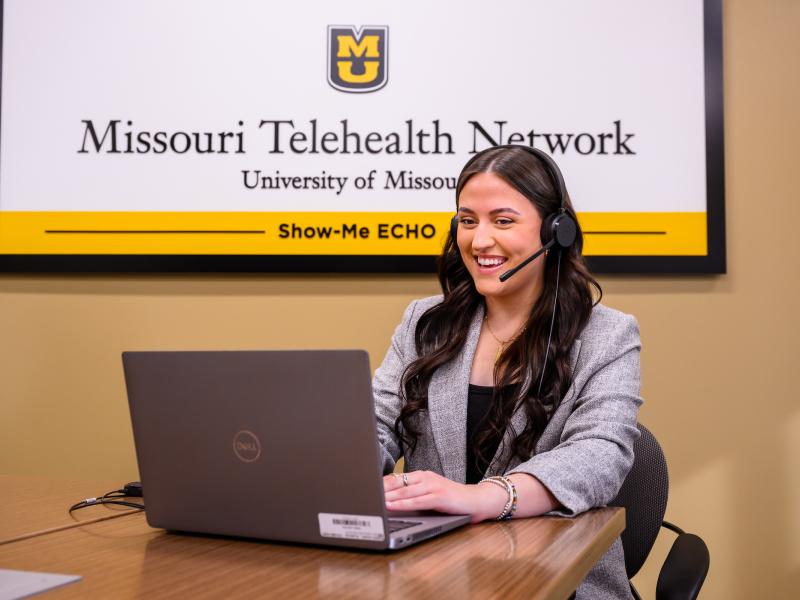

The Center for Telehealth Research and Policy (C-TRaP) was created to answer a critical question: How can telehealth truly improve care for patients and communities, especially in rural and underserved areas?
C-TRaP brings together researchers, clinicians, and data scientists to study the effectiveness, cost, and impact of telehealth on real-world care delivery. From evaluating patient outcomes to informing national policy, the center generates evidence that guides smarter decisions in healthcare.
Working in partnership with universities and healthcare leaders across the country, the center applies data science, machine learning and the Project ECHO model to develop scalable, evidence-based solutions. These insights help shape practice and policy at the local, state, and federal levels—ensuring that telehealth advances equity, access and quality for all.
Founded in 2025 through a competitive award from the Health Resources and Services Administration (HRSA), C-TRaP serves as the National Telehealth Research Center. Under the umbrella of the Missouri Telehealth Network, the center unites experts from the University of Missouri—representing the School of Medicine, Sinclair School of Nursing, College of Health Sciences and the College of Engineering—Michigan State University and the University of Mississippi to advance the future of telehealth.
Mission
The Center for Telehealth Research and Policy (C-TRaP) evaluates the impact of telehealth on patient outcomes, healthcare systems, and policy, generating evidence-based solutions to improve equitable access, particularly in rural and underserved communities.
Key Objectives
- Improve outcomes – Test whether remote patient monitoring (RPM) can cut 30-day readmissions for rural congestive heart failure (CHF) patients by 40%.
- Inform policy – Track telehealth use among rural Medicaid beneficiaries before and after COVID-19 policy changes to guide state and federal decisions.
- Transform practice – Measure how Project ECHO participation drives clinical change in chronic pain management, using AI and Medicaid claims data.
- Understand adoption – Study leaders from 34 North American ECHO hubs to identify drivers and barriers to early telehealth innovation.
- Advance secure data sharing – Build a privacy-preserving federated learning (FL) repository that enables safe, decentralized AI model training for Project ECHO.
Together, these projects position C-TRaP to strengthen the evidence base for telehealth, improve healthcare delivery in rural areas, and support scalable innovations that shape the future of telehealth policy and practice.
Disclaimer: The Center for Telehealth Research and Policy (C-TRaP) is funded by the Office for the Advancement of Telehealth (OAT) in the Health Resources and Services Administration (HRSA), U.S. Department of Health and Human Services (HHS) under cooperative agreement number 1 U3GTH55162‐01‐00. The funding supports this website as well as all publications and presentations advanced from listed research projects. These contents are solely the responsibility of the authors and do not necessarily reflect the views of HRSA or any other funding agency.