
 Date & Time: Friday, October 23, 1-2 p.m. CDT
Research in Biomedical Informatics, Biostatistics and Medical Epidemiology includes clinical informatics, epidemiology and population health, health informatics and surveillance, biostatistics, medical informatics, medicine, enabling and improving efforts in translational precision medicine and basic science investigation.
Services & Consultation
- Biomedical Informatics
- Biostatistics Unit
- Bioinformatics and Genomics Lab
- Center for Medical Epidemiology and Population Health (CMEPH)
Department research support features peer-reviewed sources including the National Institutes of Health (NIH), the Patient-Centered Outcomes Research Institute (PCORI), the Centers for Disease Control and Prevention (CDC), the National Science Foundation (NSF), the Missouri Department of Health and Senior Services (DHSS), the Missouri Foundation for Health (MFH), Department of Veteran Affairs, Robert Wood Johnson Foundation, and other federal, state, local, academic, and foundation partners.
Faculty members actively participate in institutional research activities collaborating with various University of Missouri units including the NextGen Precision Health initiative, MU Institute for Clinical and Translational Science, Ellis Fischel Cancer Center, the Bond Life Sciences Center, MU Institute for Data Science and Informatics, and the UMKC Center for Health Insights.
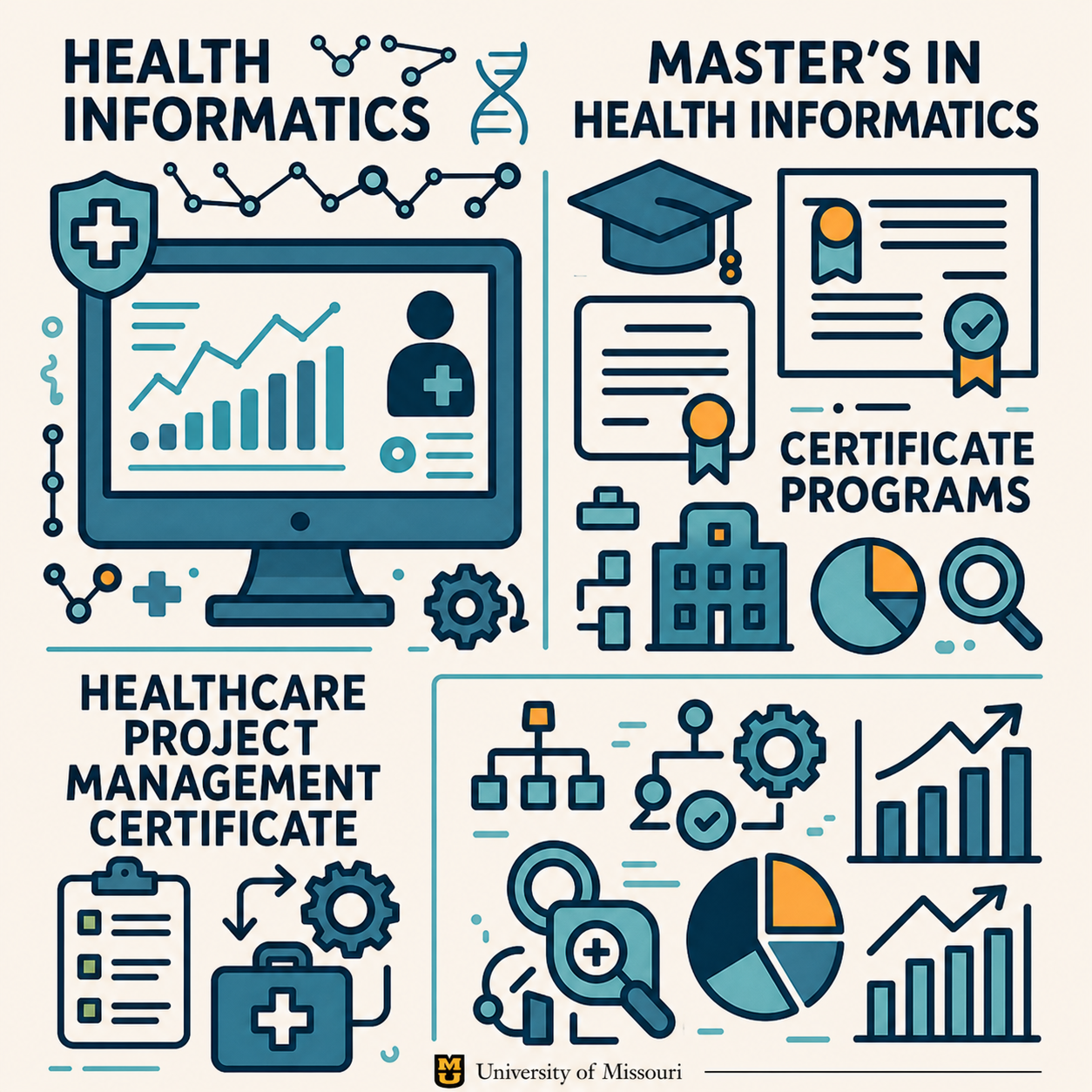
Graduate students study to obtain a master's degree, with certificates available to support specialized professional subject matter, engage in assistantships in research working with faculty in the department and centers. For additional information regarding MSHI (Informatics) programs, please contact the Director of Graduate Studies, Fares Alahdab, MD, MSc.
Research training opportunities for post-doctoral fellows, residents, medical students, and undergraduates at times may also be available; those interested should contact individual centers and faculty members. The diversity of biomedical informatics, biostatistics and medical epidemiology investigators generates significant funded research contributions to health and medicine in Missouri and beyond.
The department includes the following centers, cores, and labs:
Research Groups/Labs
- Greater Plains Collaborative (GPC) – funded by PCORnet
- Health Informatics for Diabetes Research (HIDR) core – funded by NIH NIDDK
- Image-guided Biocuration of Disease Pathways From Scientific Literature – R01 funded by NIH
Associated Centers/Organizations
- MU Center for Health Ethics (CHE)
- MU Center for Health Policy (CHP)
- MU Institute for Data Science & Informatics (MU-IDSI)
- Washington University CDTR Informatics Core at MU (HIDR Core)
Some Current Research Areas and Topics
- Accountable healthcare systems
- Bioinformatics
- Biomedical Informatics
- Biostatistics
- Cancer genomics
- Cancer research registry
- Clinical informatics
- Clinical research informatics
- Consumer health informatics
- Computational biology, whole-genome sequencing data
- Diabetes translational research dissemination
- Electronic medical records (EMR)
- Electronic health records (EHR)
- Health surveillance projects
- Healthcare industry economics, finance, and policy
- Informatics for healthcare
- Medical informatics
- Population-based cancer registry
- Public health informatics
- Pregnancy risk assessment monitoring system (PRAMS)
- Translational BioInformatics